Secure the quality of your nutraceutical developments
Tell us about your project through our qualification form. Our teams will review it and get back to you to frame your quality and regulatory requirements.
A European-scale site, FSSC 22000 certified and operating in accordance with the requirements of the FDA 21 CFR Part 111 framework, B Corp certified.

Our certifications are issued and verified by independent bodies.

HACCP protects against unintentional hazards: it is a regulatory baseline common to all manufacturers. FSSC 22000 goes further and also covers intentional risks, with two requirements.
Protecting your products against malicious acts and intentional contamination, at every stage of manufacturing.
Preventing fraud and adulteration of ingredients, to guarantee the authenticity of what goes into your formulations.
For your brand, this is a two-fold safeguard: the integrity of the formulation and confidence in the origin of the raw materials.

Our quality control follows a risk-based approach: each supplier-ingredient pairing is subject to an annual quality assessment and a risk matrix, and control plans are tailored to the profile of each ingredient. Our laboratories analyse 100% of incoming batches, combining our in-house analytical expertise with a network of specialist partner laboratories.
Identification and authentication: authenticity verification and HPTLC for plants, infrared spectroscopy for other actives, sequencing for probiotics.
Physico-chemical analyses: active content, physical parameters and water activity (Aw).
Probiotic viability: testing strain viability to secure their performance through to the best-before date.
Contaminant screening: pesticides, heavy metals, PAHs and pyrrolizidine alkaloids, entrusted to a network of specialist partner laboratories.
This level of control also supports your commercial messaging: by guaranteeing the actual active content, our analytical methods provide you with the data needed to substantiate your products’ health claims, approved by EFSA or pending.
This analytical control rests on an equally well-managed supply chain, from the sourcing of raw materials to the traceability of flows.
At PiLeJe CDMO, quality is not settled only at the end of the line: it mobilises a major share of our teams, day to day.
More than 50% of the site’s workforce is dedicated to support functions: laboratories, quality assurance and innovation.
Our quality expertise is organised around two complementary poles, a genuine differentiator of our model.
Listing and qualification of raw materials, supplier evaluation and raw material risk management.

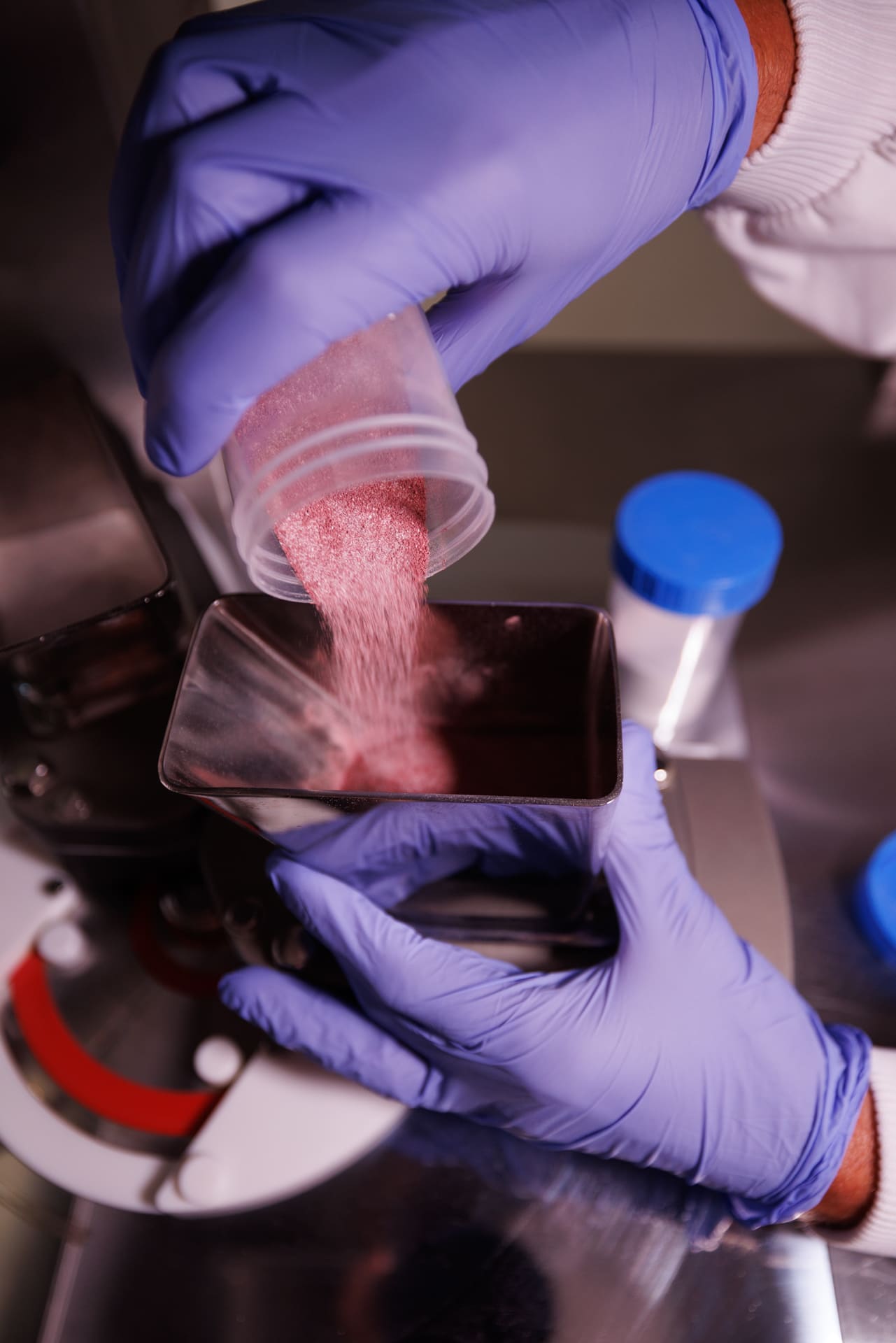
Development and implementation of analytical methods, control of raw materials and products, driven by in-house analytical expertise.
These two poles rest on a cross-functional quality assurance function, which steers the process approach and documentation, manages changes (change control), handles non-conformities and customer complaints, and qualifies equipment. A continuous-improvement dynamic, driven by performance indicators and team training, completes the whole.

Our quality teams work well beyond control. We build in regulatory constraints from the design stage and provide the technical documentation needed to bring the product to market: health claims approved by EFSA or pending, stability studies, export dossiers.
You retain command of the regulatory steps tied to the marketing of your product. On our side, we provide you with all the necessary technical elements through comprehensive documentation, ready to support your registration dossiers.
Beyond food safety
On 100% of incoming batches
Changes, non-conformities and complaints managed
Applied to every batch, without exception

Tell us about your project through our qualification form. Our teams will review it and get back to you to frame your quality and regulatory requirements.
The Saint-Bonnet-de-Rochefort industrial site is FSSC 22000 certified and operates in accordance with the requirements of the FDA 21 CFR Part 111 framework, with standards inspired by the pharmaceutical industry. Quality is systemic: three integrated laboratories and a dedicated team control every stage, from the listing of raw materials to the secure release of batches. The PiLeJe group is also B Corp certified.
FSSC 22000 incorporates the ISO 22000 standard and HACCP risk analysis, then goes further with reinforced food defense and food fraud requirements. Where HACCP is an obligation common to all manufacturers, these additional requirements are a real advantage.
PiLeJe CDMO analyses 100% of incoming batches before production, using a risk-based approach. Each supplier-ingredient pairing is subject to an annual quality assessment and a risk matrix. Identification and authentication are carried out in-house (HPTLC, sequencing), while contaminant screening is entrusted to specialist partner laboratories.
Yes. From the development stage, formulations undergo stability studies under real-time and accelerated conditions, in line with ICH standards. These studies secure the durability of the actives and the viability of the probiotic strains through to the best-before date.
We provide the technical documentation needed to bring the product to market, including the substantiation of health claims approved by EFSA or pending. Regulatory validation and product registration remain the responsibility of the brand owner, depending on their market of sale.
Yes. PiLeJe CDMO applies a single standard, identical for every batch manufactured at the site, without exception.
Our Saint-Bonnet-de-Rochefort site operates in accordance with the requirements of the FDA 21 CFR Part 111 framework, audited every year by independent third parties, which supports projects for brands selling dietary supplements in the US. One point matters: PiLeJe CDMO is neither registered nor certified by the FDA, which does not certify manufacturing sites located in Europe — our official certification is FSSC 22000. The registration of the product and the validation of its claims for the US market remain the responsibility of the brand owner.